
Monthly tips, creative ideas, helpful advice, and giveaways—delivered straight to your inbox.
5 Books School and District Leaders Should Consider for the 2026–27 School Year
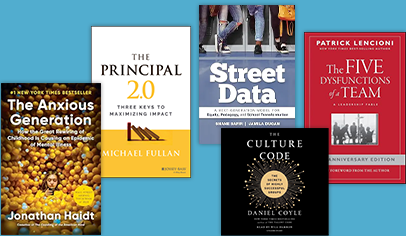
School and district leaders are balancing more priorities than ever: student well-being, staff culture, communication, instructional goals, and the daily systems that keep schools running smoothly. A thoughtful professional reading list can provide more than inspiration. It can help leaders reflect, ask better questions, and explore new approaches to supporting students, staff, and families.
As leaders prepare for the 2026–27 school year, these five books offer perspectives on leadership, culture, teamwork, and some of the challenges schools are navigating today. While these titles are not all new releases, each continues to provide ideas and frameworks worth considering for leadership teams, professional learning groups, and individual reflection.
1. The Anxious Generation by Jonathan Haidt
Student well-being continues to be a major focus for schools and districts. The Anxious Generation has become part of a broader conversation about childhood, technology, and mental health, offering one perspective for leaders to consider as communities discuss how digital habits and changing experiences are affecting young people.
For school and district leaders, the book may prompt important conversations about questions such as:
- How are student habits, attention, and social experiences changing?
- What does healthy technology use look like within a school community?
- How can schools partner with families around student well-being?
- Where might communication and expectations need to become clearer?
Whether leaders agree with every point in the book or not, it can serve as a starting point for thoughtful discussion among administrators, principals, counselors, and family engagement teams. It may be especially relevant for schools reviewing policies, support systems, and communication practices related to student wellness.
2. Street Data by Shane Safir and Jamila Dugan
Data plays an important role in school improvement, but numbers alone rarely tell the full story of what students, staff, and families experience. Street Data encourages leaders to look beyond traditional measures and spend more time listening to the voices, experiences, and perspectives of their communities.
For school systems focused on building trust and making meaningful improvements, this approach offers an important reminder: effective decisions are built on understanding the people behind the data.
District and school leaders may find this book helpful when considering:
- How to gather more meaningful feedback from families and staff
- How to better understand the experiences behind the numbers
- How to identify gaps between leadership intentions and community experiences
- How to create improvement efforts that feel more responsive and inclusive
For leaders focused on strengthening family communication and school-home connections, the ideas in this book can be especially valuable. Strong systems are not only efficient. They should also be accessible, understandable, and designed around the needs of the communities they serve.
3. The Principal 2.0 by Michael Fullan
Leadership is often defined through everyday actions. The Principal 2.0 offers practical ideas for school leaders who want to reflect on visibility, trust, consistency, and the culture they create through their daily interactions.
This book may be especially useful for principals, assistant principals, and district leaders who support campus administrators. Rather than focusing only on leadership theory, it explores the habits and mindset that influence how leadership is experienced throughout a school community.
Topics that may spark reflection include:
- Leading with purpose and presence
- Building trust with staff, students, and families
- Creating a positive school culture
- Modeling the values leaders want to see throughout their organizations
For districts developing leadership cohorts or principal learning groups, this title can provide a practical foundation for discussion and reflection.
4. The Culture Code by Daniel Coyle
Every school system talks about culture, but building and maintaining a strong culture requires intentional work. The Culture Code explores what helps teams feel connected, supported, and committed to a shared purpose.
This perspective is especially relevant in education, where success depends on collaboration among educators, administrators, support staff, students, and families. Even strong plans can struggle when teams lack trust, alignment, or a sense of connection.
School and district leaders may find this book helpful when working to:
- Strengthen staff collaboration and morale
- Improve alignment across schools or departments
- Build trust within teams
- Create a stronger shared sense of purpose during times of change
This can be a useful shared read for leadership teams, cabinet groups, or departments looking for common language around teamwork and culture.
5. The Five Dysfunctions of a Team by Patrick Lencioni
Strong schools depend on strong teams. The Five Dysfunctions of a Team remains a widely used leadership resource because it provides a simple framework for discussing common challenges that affect trust, communication, and decision-making.
For school and district leaders, the value of this book is not just identifying areas where teams may struggle. It is creating opportunities for more honest conversations about how teams work together.
This title may be especially helpful for teams that are:
- Navigating change or new initiatives
- Clarifying roles and responsibilities
- Improving meetings and decision-making processes
- Building stronger accountability across departments or campuses
Because the framework is approachable and discussion-based, it can work well as a shared leadership team read or a resource for team-building conversations.
Why these books are worth considering for the 2026–27 school year
These five books do not address the same challenges, and that is part of what makes this collection valuable.
Together, they explore several priorities school and district leaders continue to navigate:
- Student well-being
- Family and community voice
- Principal leadership
- Staff culture
- Team effectiveness
This is not simply a list of books about leadership theory. Each title connects to the day-to-day work of creating stronger schools, supporting educators, and building meaningful connections with students and families.
A practical way to use this reading list
Professional reading is most valuable when it connects directly to the work happening in schools. Consider choosing books based on your team’s current priorities. As you prepare for the 2026–27 school year, these five books offer a place to reflect on leadership, culture, communication, and the continued work of supporting school communities.

Monthly tips, creative ideas, helpful advice, and giveaways—delivered straight to your inbox.