
Monthly tips, creative ideas, helpful advice, and giveaways—delivered straight to your inbox.
Digital Overload in the Classroom: Why Teachers Are Looking for More Balance
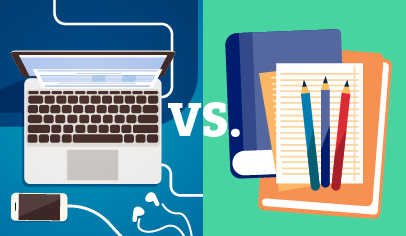
As technology continues to expand, many educators are feeling the weight of managing a more digitally connected teaching environment, and many parents and teachers alike feel that students spend too much time on screens. According to our 2026 Teacher Survey, 59% of teachers report feeling a definite sense of digital overload—a 6% increase from 2025. Another 29% of teachers surveyed report feeling at least some level of digital overload. Together, these numbers show that nearly 9 out of 10 teachers are experiencing some degree of fatigue from the growing role of technology in education.
When Technology Becomes Too Much
For many teachers, digital tools have become another layer to manage on top of lesson planning, grading, classroom management, and supporting student needs. Between multiple learning platforms, device troubleshooting, online assignments, notifications, and screen time expectations, technology can sometimes create more complexity rather than simplicity.
While devices can enhance learning, teachers are also thinking about the importance of balance. Students need opportunities to collaborate, think critically, create, and engage with other classmates, without always relying on a screen. Screens also come with a host of other distractions that can separate students from the task at hand.
A Return to the Basics
Our survey found that many teachers would like to go “back to basics” to reduce digital overload. Respondents pointed to traditional approaches, like using pen and paper and returning to more textbook-based learning, as ways to create a healthier balance in the classroom. Writing by hand can encourage focus, reflection, and deeper engagement, while printed materials can give students a break from constant screen exposure. Textbooks and other physical resources can also provide structure and help students build foundational knowledge without the distractions that often come with digital platforms.
While teachers typically can’t control what curriculum and materials they’re required to use, many have autonomy over how they teach. Even in technology-rich classrooms, teachers have opportunities to choose when a pen, paper, notebook, or physical resource is the better tool for learning.
Ways to reduce classroom screen time:
- Require or recommend handwritten notes over typing
- Use paper worksheets instead of an online activity
- Have students read physical books over e-books
- Give students paper-based practice opportunities
- Reduce optional screen-based activities (ie., indoor recess activities don’t include a screen time option)
- Supplement district curriculum with additional printed resources
- Read books aloud to the class over playing a video or audiobook of someone else reading
- Check out our Facebook post to see real teachers’ thoughts on the topic and how they might be handling it.
There’s also a broader movement toward reducing screen dependence happening right now. AP reported in June 2026 that schools and educators are increasingly reconsidering heavy device use, with some districts implementing policies to reduce screen time and parents and educators advocating for more pen-and-paper learning.
Finding the Right Balance
The goal isn’t to eliminate technology from classrooms. Digital tools can be valuable when they support meaningful learning and make teaching more effective. The challenge is finding the right mix—using technology intentionally while preserving the proven benefits of hands-on learning and encouraging face-to-face collaboration.
As schools continue to navigate an increasingly digital world, teachers are reminding us that sometimes moving forward also means looking back. A balanced classroom may be one where students can benefit from the best of both worlds: the innovation of technology and the focus, creativity, and connection that come from learning beyond the screen.

Monthly tips, creative ideas, helpful advice, and giveaways—delivered straight to your inbox.